A sponsorship marketplace is only useful if it removes friction between a real audience and a real advertiser. Sponsorships.ai is built around that narrower job: creators list their audience and rates, brands browse by niche and format, then both sides manage the agreement directly.
This is not a hands-on review and it is not a promise that a media kit will produce income. A marketplace can make a creator easier to discover, but it cannot replace audience trust, a clear niche, realistic pricing, or reliable delivery. The practical question is whether a flat-fee model is a better test than giving a percentage of every deal to an agency or network.
| At a glance | What to know |
|---|---|
| Best fit | Newsletter operators, podcasters, YouTube creators, and event organizers who can describe a specific audience and sell a repeatable placement. |
| Core workflow | Build a public profile and media kit, publish rates, list available inventory, agree scope directly, then track delivery and invoicing. |
| Potential upside | A flat membership can preserve more of a completed deal than a percentage-based marketplace, if the creator can actually attract and close suitable sponsors. |
| Main risk | No platform creates sponsor demand by itself. A weak audience, vague offer, or unproven delivery process still produces weak results. |
| Worth testing when | You already have audience data, a narrow niche, and a simple offer a brand can understand without a long sales call. |
| Avoid when | You have no audience proof, cannot define a placement, or expect the tool to replace direct relationship-building and sales work. |
What Sponsorships.ai appears to offer
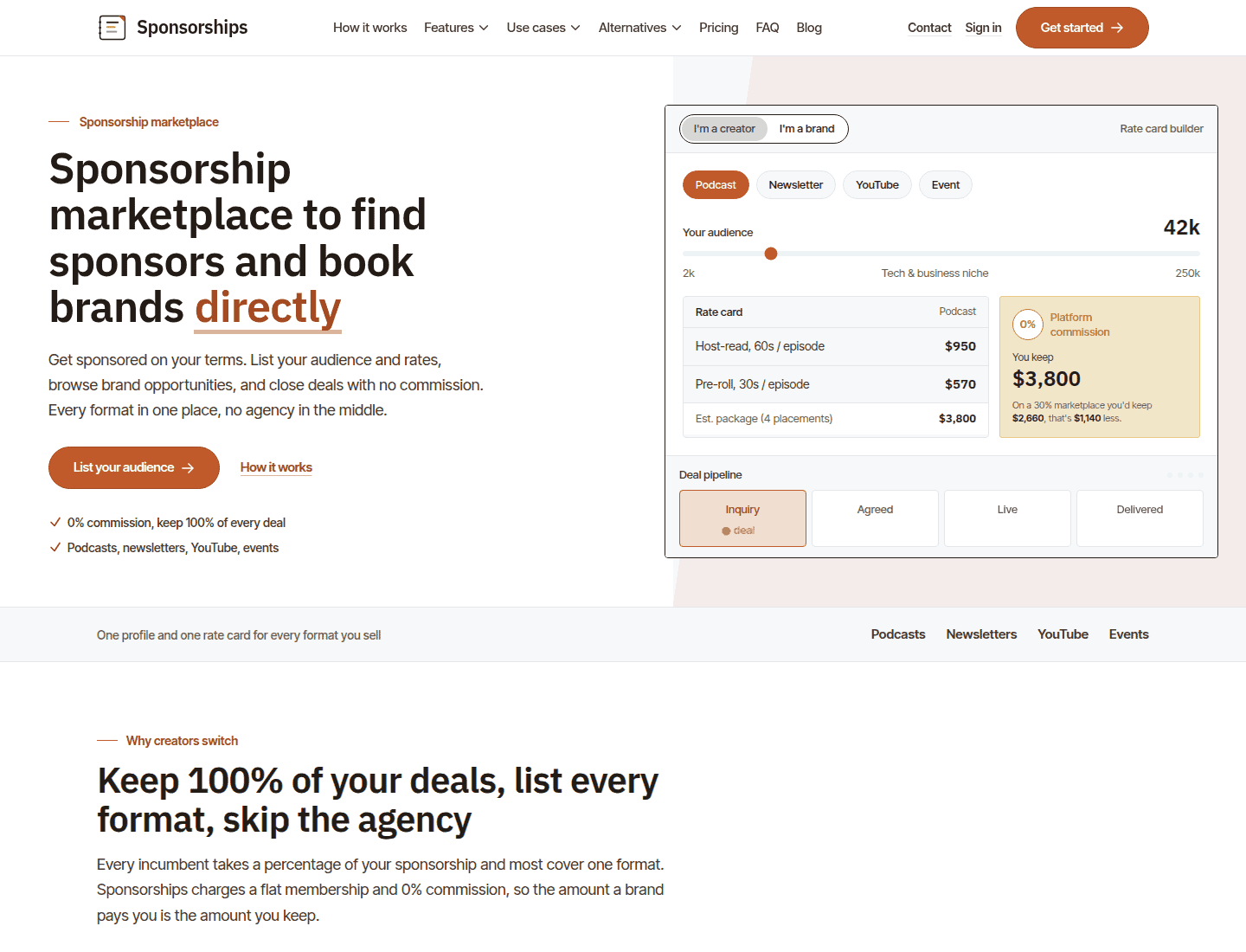
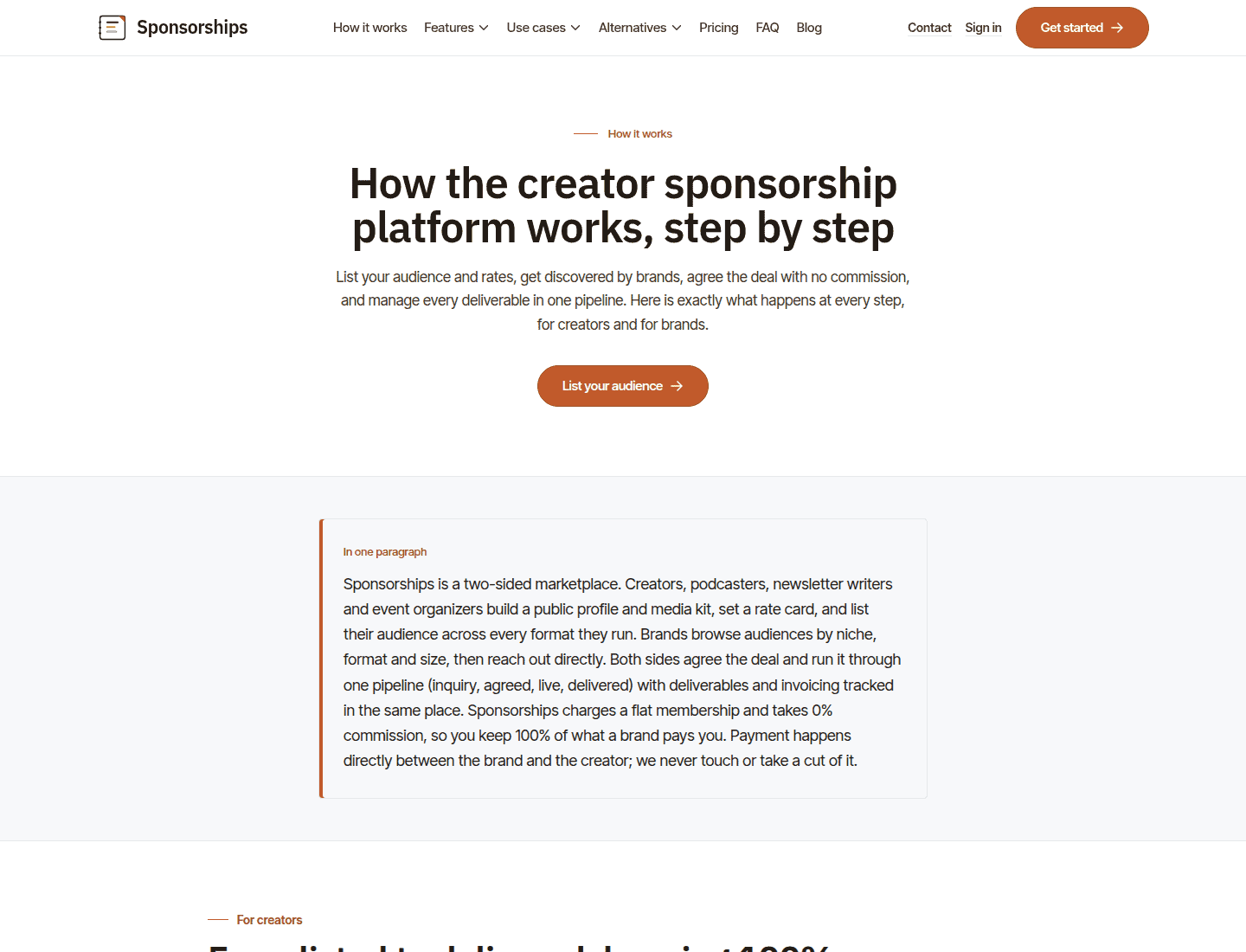
The public product pages position Sponsorships as a two-sided marketplace for podcasts, newsletters, YouTube channels, and events. The creator side combines a profile, media kit, rate card, listing inventory, and a simple deal pipeline. The brand side can browse audiences by niche, format, audience size, and rate before reaching out.
The distinguishing claim is commercial rather than technical: the service charges a flat membership and says it takes no commission from the deal itself. Payments happen directly between the brand and creator, so the platform is not presented as an escrow or payout processor.
Why the flat-fee idea can be attractive
Percentage fees are not automatically bad. A network or agency can earn its cut when it brings qualified buyers, negotiates, handles paperwork, and protects a creator's time. The trade-off is that the percentage reduces every completed deal. A flat-fee marketplace asks the creator to keep more control over sales, scope, and relationships in exchange for keeping the full agreed payment after its membership cost.
| Route | What the creator controls | What to evaluate |
|---|---|---|
| Direct marketplace | Profile, rates, negotiation, deliverables, invoicing, and buyer relationship. | Whether discovery creates qualified conversations and whether you can manage the sales process. |
| Agency or managed network | Usually the audience and final approval, while the intermediary may sell or manage the deal. | Whether the time saved and buyer access justify the percentage or margin. |
| Manual outreach | Everything, including prospecting and follow-up. | Low cash cost, but high time cost and a need for disciplined targeting. |
The workflow is more important than the listing
A polished profile is useful, but the commercial work begins after a brand shows interest. A small operator should define the deliverable, what the sponsor receives, the send or publish date, the approval process, the reporting window, and the payment terms before calling a deal complete.
| Step | Practical action | Reason |
|---|---|---|
| 1. Define the audience | State who the audience is, why they pay attention, and which format reaches them. | A raw follower or subscriber total does not explain relevance to a buyer. |
| 2. Create a small rate card | List one or two placements you can deliver consistently, with clear scope. | Simple offers make it easier for a brand to decide and reduce endless custom quoting. |
| 3. Keep proof ready | Collect current reach, engagement, past examples, and basic audience context you are allowed to share. | Sponsors buy credible fit and a reliable process, not a vague promise of exposure. |
| 4. Agree the deal in writing | Confirm deliverables, deadline, approvals, disclosure requirements, and payment terms. | A short written scope prevents most avoidable disputes. |
| 5. Deliver and report | Send the agreed placement, save proof, and share only the performance data promised in the scope. | Clean delivery creates the best chance of a renewal or referral. |
Pricing: treat the published plans as a starting point
The current public pricing pages list paid memberships for creators and brands and emphasize no commission on deals. Plan names, monthly versus annual billing, and feature limits can change, so check the live pricing page before making a budget decision. More importantly, compare the membership cost with the likely value of one realistic placement, not an optimistic annual-income projection.
The same discipline applies to a rate card. Price from the audience a sponsor can realistically reach, the work required to produce the placement, the value of exclusivity or timing, and the evidence you can supply after delivery. Do not copy another creator's rate just because the subscriber count looks similar.
Who should test it first
- A focused newsletter with a defined reader group, a consistent schedule, and honest open-rate or engagement context.
- A podcast with reliable episode cadence and a clear listener profile rather than a broad, undefined audience.
- A YouTube channel that can package one understandable integration or sponsor mention without confusing viewers.
- An event organizer with a specific attendee group, inventory, and enough lead time to fulfill a sponsor package.
- A small publisher who would rather test direct sponsorship inventory before adding more display ads or chasing broad affiliate offers.
When to stay skeptical
- Do not treat marketplace discovery as guaranteed sponsor demand, booked deals, traffic, or income.
- Do not publish inflated audience figures or promise conversions you cannot measure.
- Do not take a sponsor that is a poor audience fit just to fill inventory. Short-term revenue can damage trust and future performance.
- Do not skip advertising disclosures, contract terms, tax obligations, or brand-safety checks simply because the deal is direct.
- Do not buy a subscription before you can explain your audience, placement, price, and delivery process in plain language.
Alternatives and adjacent options
| Option | Better for | Watch out for |
|---|---|---|
| Direct sponsorship marketplace | Creators who want a public media kit, direct buyer contact, and control over their rates. | You still need to handle qualification, negotiation, and delivery. |
| Newsletter ad network | Publishers that qualify for a managed inventory or network matching model. | Network rules, minimums, take rates, and payout timing can matter more than the headline opportunity. |
| Sponsor research database | Operators prepared to run focused outbound to brands already active in their niche. | A database supplies prospects, not a signed deal or a persuasive offer. |
| Manual media kit plus outreach | Very early creators with a short target list and limited budget. | It costs time and requires consistent follow-up, but it is a valid way to validate interest. |
For BuildForIncome readers building a content asset first, the better order is usually audience clarity, useful publishing, a simple offer, then monetization. The wider site has guides to monetizing small blogs before AdSense, email marketing automation, and starting a practical online business. Those solve different problems, but all benefit from a clear audience and a repeatable operating process.
When Sponsorships.ai is worth testing
- You can name a niche audience and one or two sponsor placements you can deliver reliably.
- You want to test a direct-deal route without a percentage fee on every successful agreement.
- You are willing to keep the rate card, deliverables, and follow-up process current.
- You understand that a flat membership is a cost of testing a channel, not evidence that the channel will work for every audience.
Bottom line
Sponsorships.ai is an interesting option for creators who want to package newsletters, podcasts, YouTube, or event inventory into a more bookable offer. Its flat-fee and direct-payment model can be attractive, but the real asset is still the audience and the operational discipline behind the offer.
Start with one honest media kit, one clear placement, and a small list of brands that genuinely fit. If the conversations become repeatable, a marketplace profile and simple deal pipeline can reduce admin. If the offer does not create credible interest, fix the audience proposition before adding more tools.