Disclosure: this article contains affiliate links. If you sign up through them, I may earn a commission at no extra cost to you.
The easy way to misunderstand Active Intelligence 3.0: Wavelength is to treat it like another chat box that writes marketing emails. That is not the interesting part. The release is trying to move the work upstream: use the history, patterns, instructions, and automation context already inside an ActiveCampaign account to surface a useful next move before a marketer starts from a blank prompt.
That distinction matters most for small teams. A founder does not need another tool that can produce five passable subject lines in ten seconds. They need a system that can remember what their business sells, notice an automation that needs attention, and prepare a campaign idea they can assess without rebuilding the context every time.
The short version: this is proactive account intelligence
Wavelength is the current named release of Active Intelligence. ActiveCampaign maintains current Wavelength release notes for the release, and it is the sensible place to check feature availability before relying on a particular workflow. The practical promise is not that it replaces marketing judgement. It is that ActiveCampaign can use account-specific context to prepare drafts, surface monitoring signals, and bring relevant external context to the marketer earlier in the process. You still decide what goes out. The difference is that the first useful thing on the screen should be closer to your business than a generic AI response.
| What Wavelength is trying to do | What it is not |
|---|---|
| Use account history and business context to make suggestions more relevant | Guarantee sales, predict who will buy, or make marketing decisions without review |
| Prepare proactive drafts and ideas for a marketer to review | A license to publish unedited AI copy |
| Surface automation and performance context before a small issue becomes forgotten work | A substitute for deliverability, offer quality, or customer research |
| Bring useful outside signals into the marketing conversation | A reason to chase every competitor move or industry headline |
The capabilities worth paying attention to
1. Adaptive memory
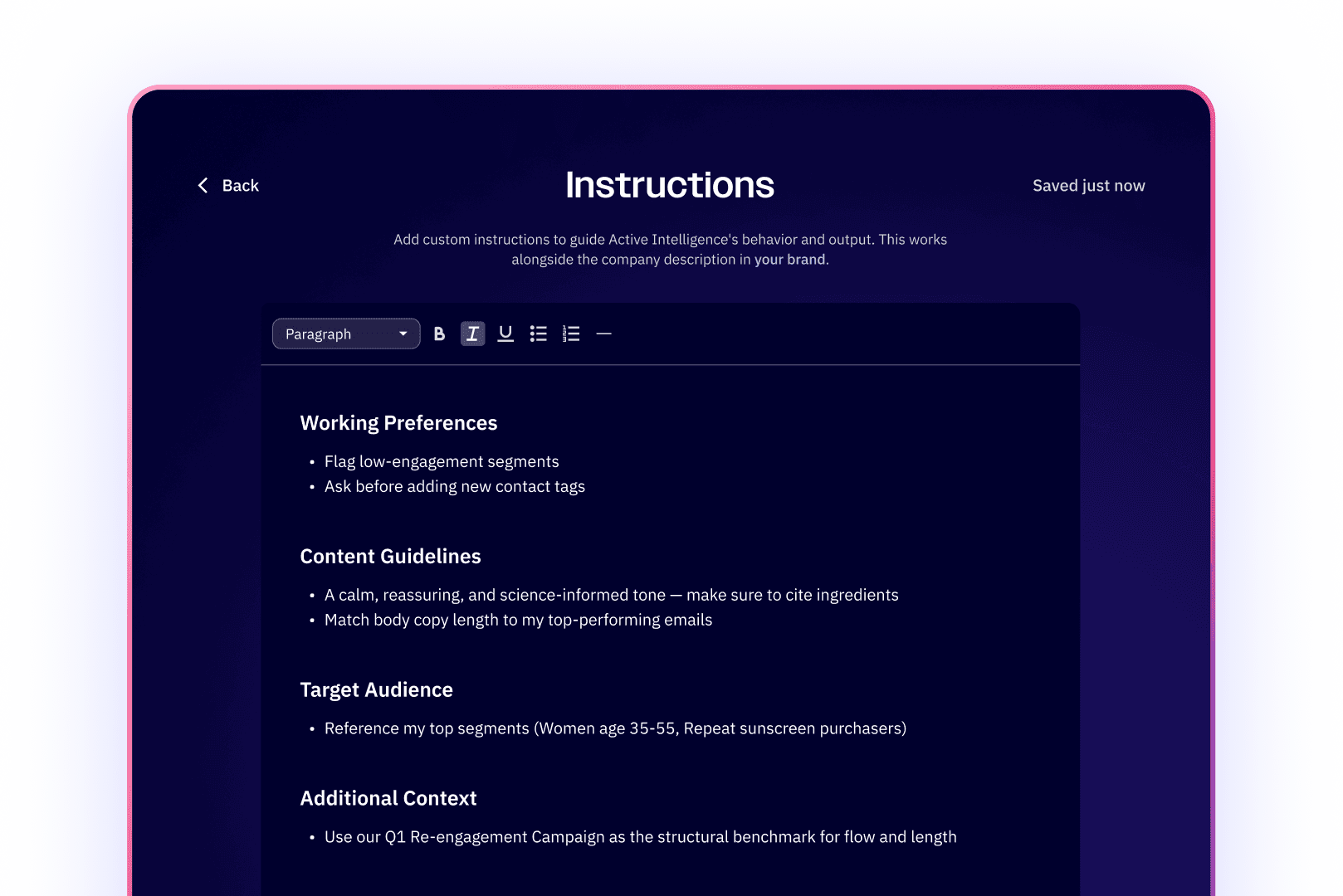
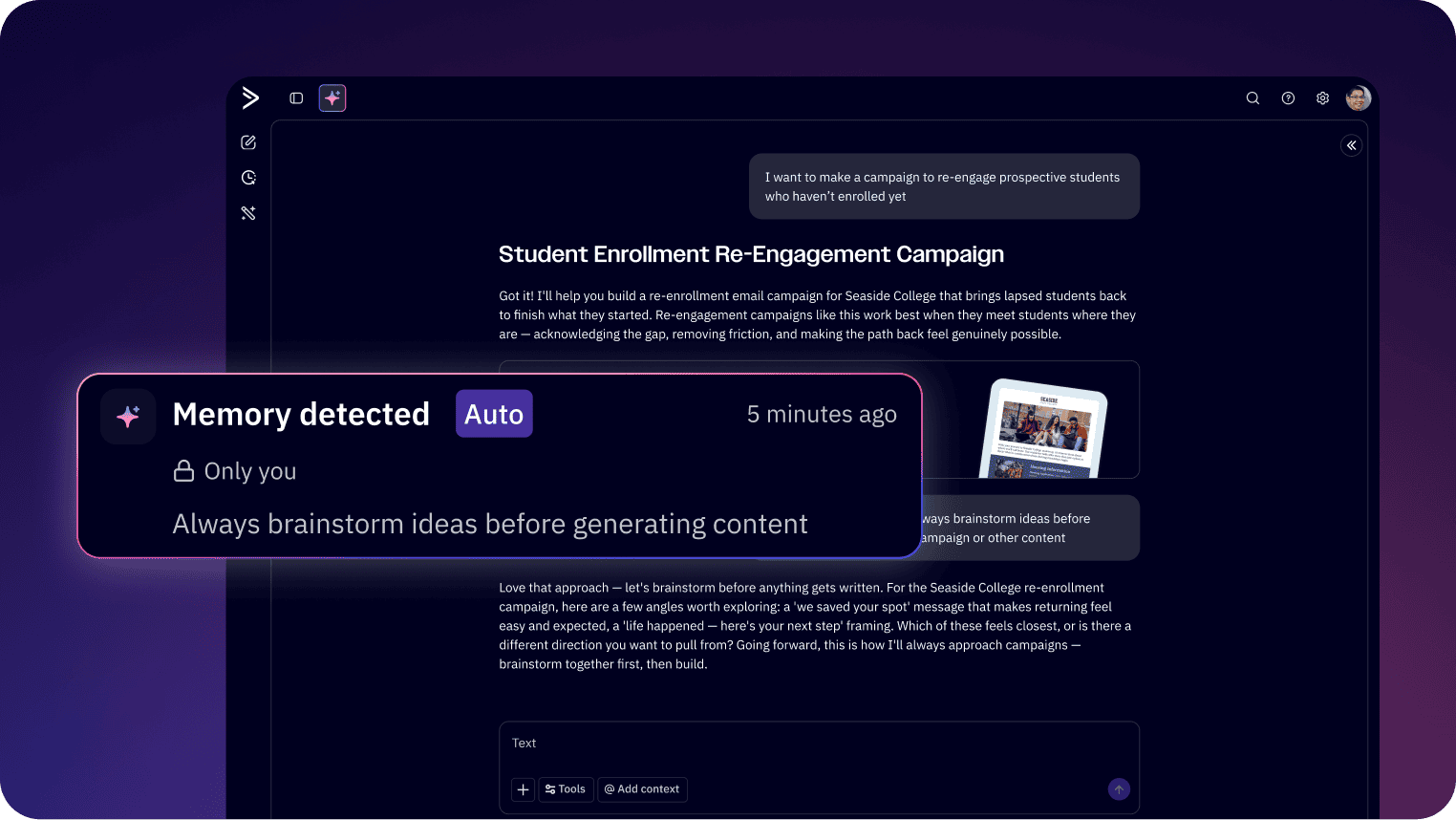
Adaptive memory is the foundation. A campaign assistant is much more useful when it does not need a full reintroduction every session. The relevant context can include past campaign work, the business voice, instructions, and the account patterns that make one recommendation sensible and another one irrelevant. For a small brand, that is the difference between AI that creates homework and AI that gives you a draft worth reviewing.
2. Proactive drafts and ideas
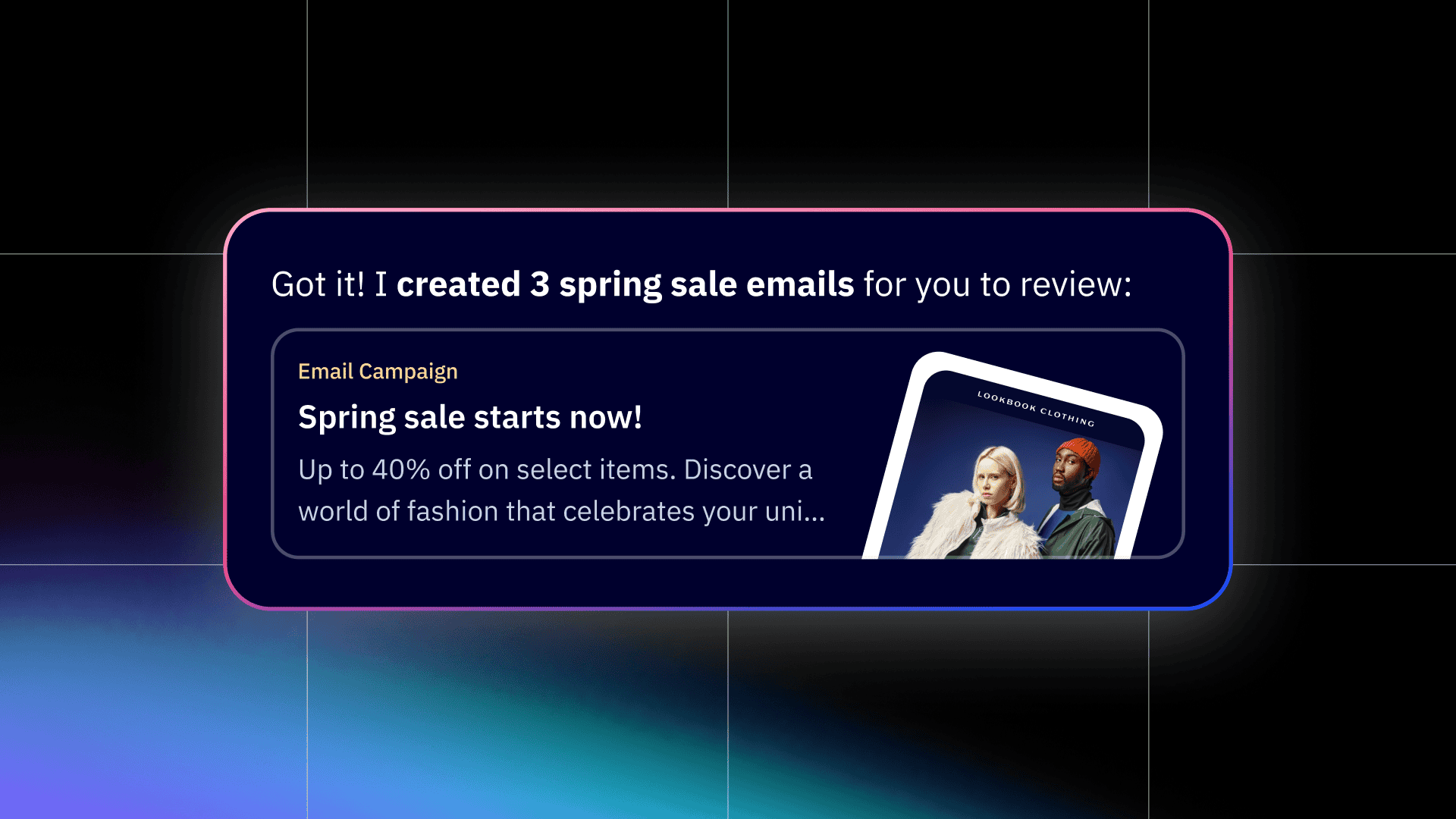
Most marketing AI starts after the human has already chosen the task. Wavelength is positioned around showing up earlier. A useful example is a draft campaign idea ready for review because the account context suggests a timely promotion, a content follow-up, or a customer communication. That is more valuable than a blank prompt, but only if the marketer can see the reasoning and edit the result.
3. Automation Insights and Automation Health
Automations are where marketing systems quietly become fragile. A welcome sequence can be technically live while a tag, condition, or message no longer makes sense for the current offer. Wavelength includes Automation Insights and Automation Health among its named capabilities. The useful framing is not “the AI will run everything.” It is “the account can help surface where a human should look before a neglected workflow costs attention or trust.”
4. External signals and content performance
A campaign calendar gets better when it is informed by more than a marketer’s memory. Wavelength also lists External signals and Content performance. For a founder, the opportunity is not automatic trend-chasing. It is having context available when deciding whether to refresh a page, send a relevant email, or leave a distracting idea alone. Good marketing still needs a reason to exist. More context makes that reason easier to test.
Why this is more useful than generic AI for a small business
Generic AI can be productive, but it starts with a context tax. You repeatedly explain your audience, your offer, what you have already sent, the tone you want, and the constraints you cannot ignore. That is manageable for one task. It gets old when the same business runs a newsletter, a welcome sequence, a sales follow-up, and several seasonal campaigns.
The Wavelength pitch is compelling when the account itself becomes the context layer. That does not remove the need for a human editor. It gives the editor a better starting point. The right test is not whether a first draft is perfect. It is whether it contains enough accurate business context that a marketer can make a confident decision quickly.
Where I would stay cautious
- Availability can vary. The release includes a set of capabilities that may roll out differently by account and plan. Check what is live in your own ActiveCampaign account before designing a workflow around a specific feature.
- Proactive does not mean autonomous publishing. Drafts, recommendations, and monitoring are useful because a marketer still reviews them. Do not treat any AI output as ready to send merely because it sounds polished.
- Context needs maintenance. Brand preferences, product positioning, and campaign goals change. Better memory helps only when the information it is working from is kept honest.
- Do not confuse activity with insight. More alerts or ideas do not automatically create better marketing. The output should connect to a real customer, offer, or business priority.
Who should test Wavelength first?
The best early candidate is a small marketing team, founder, or operator who already has useful account history but too little time to keep every campaign and automation under review. If you have a real brand voice, a few active workflows, and an audience you want to serve better, the ability to start from context is worth testing.
It is less compelling for someone with no audience, no meaningful campaign history, and no clear reason to send email yet. AI cannot create a customer relationship from zero. It can help a business that has signals make more deliberate use of them.
My verdict
Active Intelligence 3.0: Wavelength is interesting because it aims at the forgotten gap between “I have an AI tool” and “my marketing system helps me notice what matters.” Adaptive memory, proactive drafts and ideas, Automation Insights and Automation Health, plus external signals are a better direction than another template library. The real value will depend on how much relevant context the account has and how seriously the team treats review.
If you already use ActiveCampaign, inspect the Wavelength capabilities available in your account and test them against one real workflow. If you are evaluating email automation tools, use the trial to see whether the account-specific starting point is genuinely more useful than beginning every campaign from a blank page.
Frequently asked questions
Is Active Intelligence 3.0: Wavelength a separate product?
Active Intelligence is ActiveCampaign’s broader AI platform. Wavelength is its current named release. Check your current plan and account experience for capability availability rather than assuming every feature is active everywhere.
Does Wavelength write and send campaigns automatically?
It can support proactive drafts and ideas, but a sensible marketing process keeps a human responsible for review, factual accuracy, brand fit, and the decision to send.
What should I test during an ActiveCampaign trial?
Use a real site and real business context, inspect the recommendations the account produces, create one small campaign or automation, and send a test email to yourself before relying on it for a live audience.