Choosing between ActiveCampaign and Mailchimp is one of those decisions where most “comparison” articles you'll find online are written by people who use neither of them daily. I wanted to do this properly, so this month I spun up trials of both, signed up with the same site (buildforincome.com), and put each platform through the same starting tasks. What follows is what actually differs, not a feature-checklist regurgitation.
Disclosure: this article contains affiliate links. If you sign up through them I may earn a small commission at no extra cost to you.
At a glance
| What you're comparing | ActiveCampaign | Mailchimp |
|---|---|---|
| Credit card required for trial | ❌ Not required | ⚠️ Required after 100 emails sent |
| Time to first usable artifact | About 30 seconds (after pasting URL) | Multi-step questionnaire, then templates |
| What the AI auto-builds for you | 5-email welcome sequence with timing, copy, and images | One email (Sign up to Send email) |
| Email creation | Prompt-first (describe what you want) | Template-first (pick from gallery) |
| Popup forms | ❌ Not native (use a popup plugin) | ✅ Multiple templates, native triggers |
| WordPress integration | ✅ Official plugin, paste API key | JS snippet to paste in HTML head |
| Learning curve | Low, the AI does the scaffolding for you | High, expect tutorials to understand the basics |
| Starting price after trial | From the Lite tier, scales with contacts | Essentials 11.28 euros/mo, Standard 17.35 euros/mo |
The signup itself tells you a lot
ActiveCampaign asks for an email and a URL. That's it. No credit card. Paste your site URL and you're inside the platform within thirty seconds, looking at a personalized strategy generated from what Active Intelligence inferred about your business.
Mailchimp's path is different. After the sign-up screen, you go through a multi-step questionnaire (industry, top three goals you want to achieve, marketing channels you care about, what tools you're currently using). Then a “Preparing your account” loading screen runs. Then you land on a home dashboard with a black banner across the top: “Save payment information to unlock more email sends.”
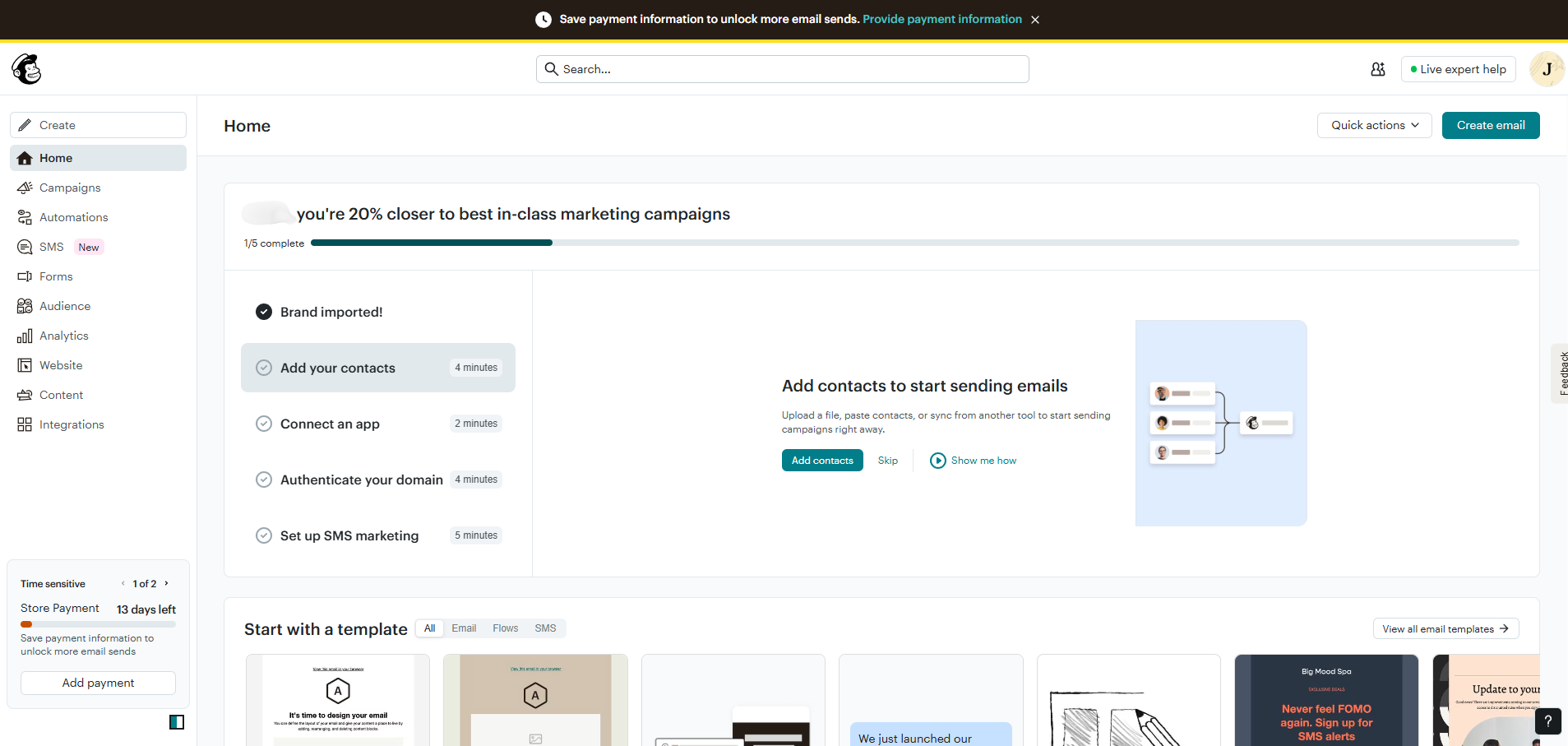
That payment-info nag follows you everywhere. It's on the dashboard, on the campaigns page, on the automations page. Mailchimp's “no credit card” claim is technically true for the first 100 emails, then you need a payment method saved. ActiveCampaign's trial is genuinely fourteen days, fully featured, no payment required.
What the platforms build for you when you arrive
This is the comparison that mattered most to me. Both platforms now market themselves on “AI-powered” automation, so I asked each one to build me a welcome sequence and compared the output. If you're still working out whether automation is even the right next step for your list, my guide on email marketing vs automation covers when the upgrade actually pays off.
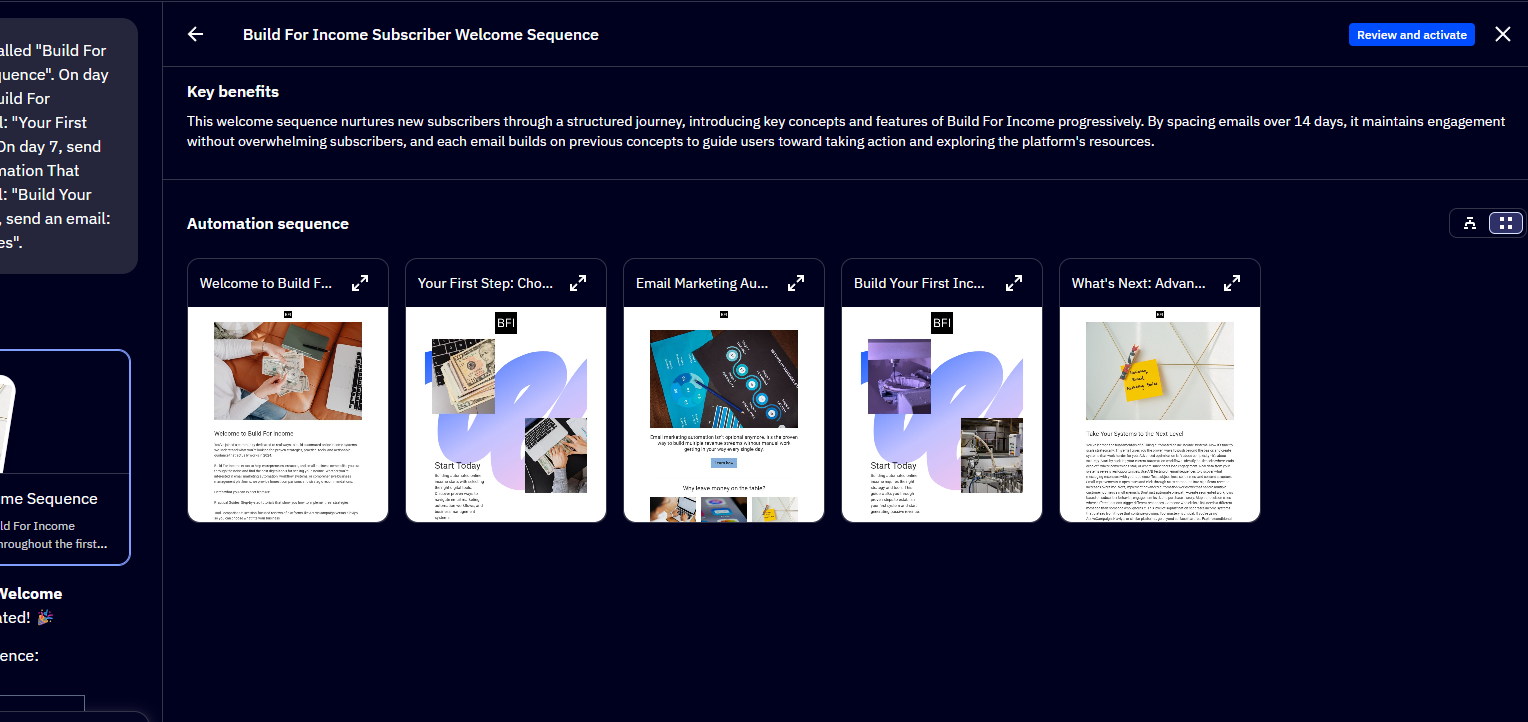
ActiveCampaign read buildforincome.com, identified the audience and content focus, and proposed a 14-day welcome sequence with five distinct emails, wait intervals between them, drafted subject lines and body copy for each email, and even auto-selected hero imagery. I then asked an AI Agent to actually build the automation, and the entire flow was assembled inside the platform in about six minutes.
Mailchimp's equivalent is called “AI-powered flow.” Here's what it gave me:
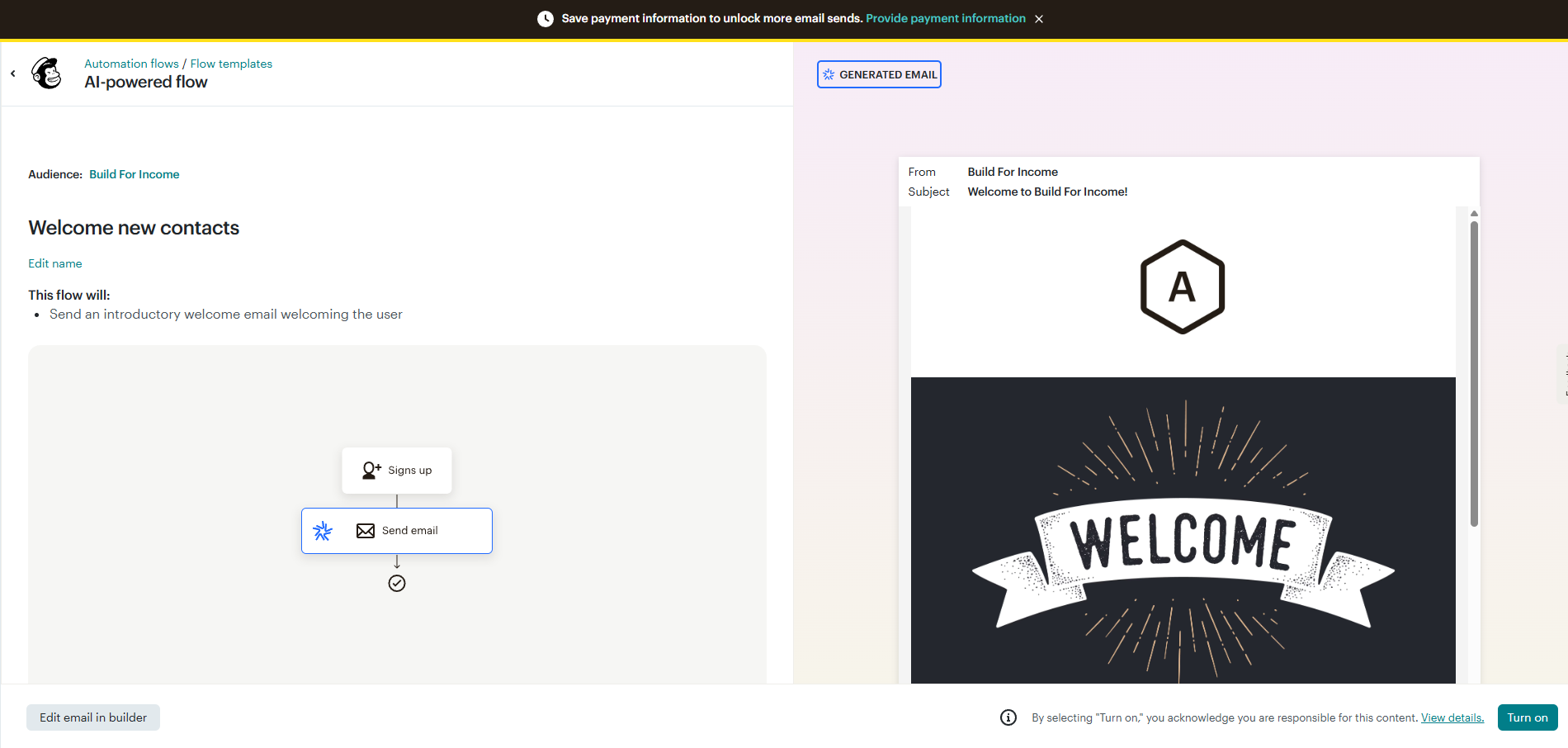
One node. Sign up to Send email. A single welcome email with a single subject line. That's the entire flow. You can build out the rest manually, but the “AI-powered” piece stops at email one. ActiveCampaign delivered a five-email sequence with timing logic. Mailchimp delivered a starter template that you still have to extend yourself.
If your time-to-working-automation matters, this gap is the single biggest practical difference between the two platforms in 2026.
Email creation: template-first vs prompt-first
Both platforms get you to a sendable email eventually, but the path is very different.
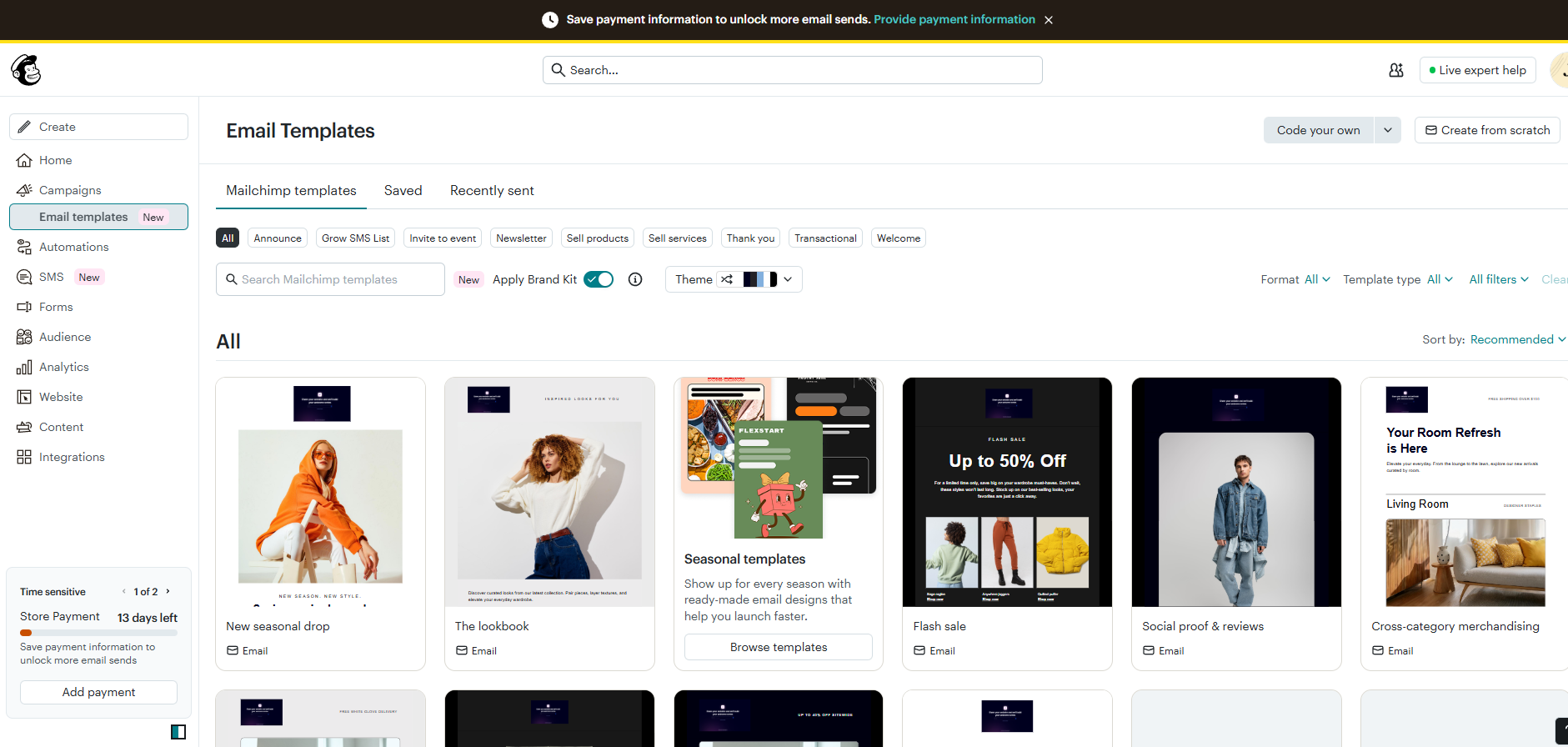
Mailchimp opens with a template gallery sorted by category (Newsletter, Self promotion, Welcome, Transactional, and so on). You pick a template, then you customize. The template library is genuinely good and Mailchimp's designs are polished, but you're still doing manual design work, dragging blocks around and editing copy block by block.
ActiveCampaign's path is to draft the email content for you based on context. You describe what you want in plain language, and the AI Agent drafts the subject line, body copy, and selects an appropriate hero image. No template gallery to scroll through. The output isn't always perfect, but it's usable as a starting point, and editing afterward is straightforward.
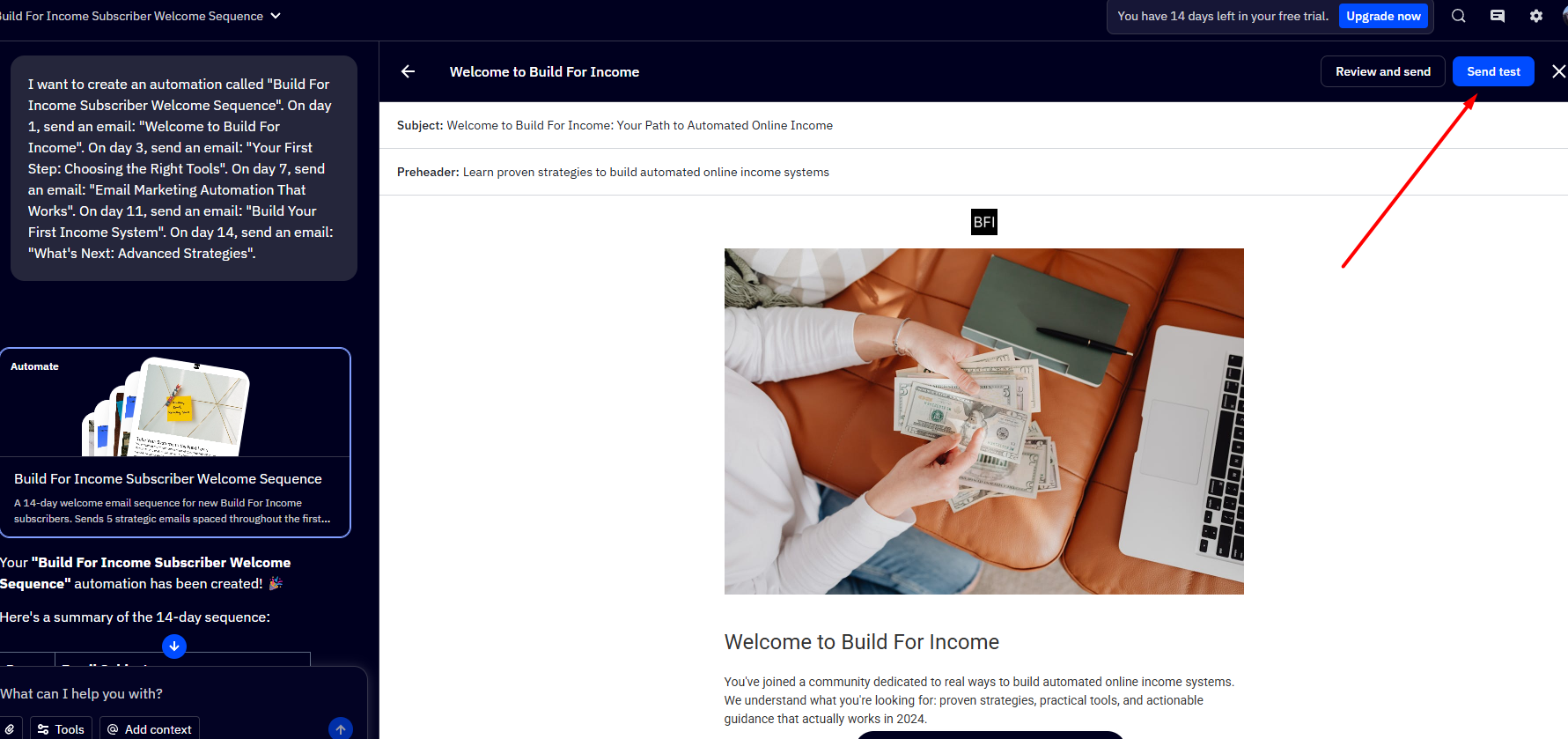
For anyone who has ever stared at a Mailchimp template editor on a Sunday afternoon trying to figure out why the spacing won't behave, the prompt-first approach is a meaningful upgrade. It's the difference between hours of fiddling and minutes of editing.
The trial limit nobody mentions
Mailchimp's free trial advertises “no credit card required.” That's correct for the first 100 email sends. Beyond that, the Automations page reminds you with a yellow banner every time you visit:
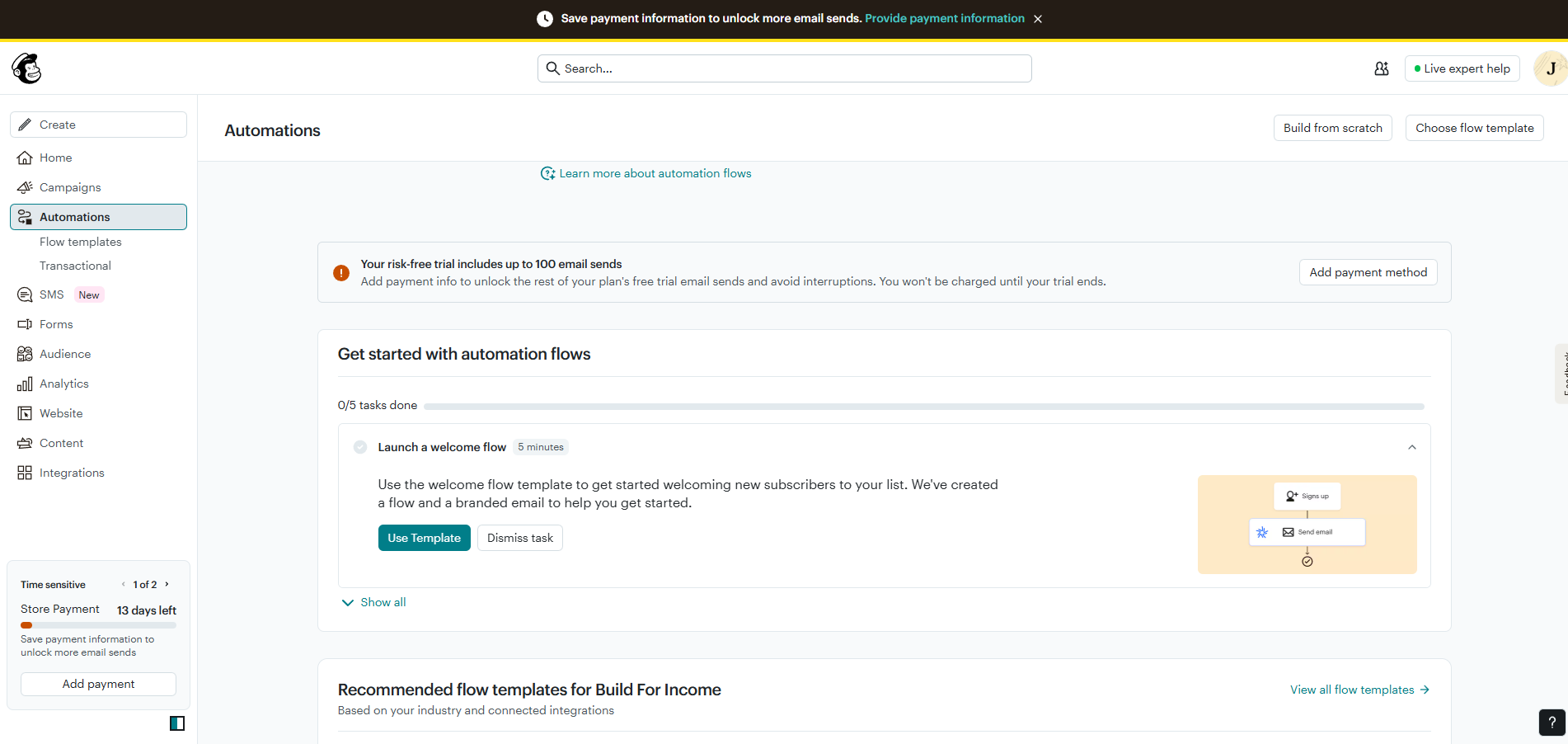
“Your risk-free trial includes up to 100 email sends. Add payment info to unlock the rest of your plan's free trial email sends and avoid interruptions.” If you're actually trying to test the platform with a small real list (say a couple hundred subscribers), you'll hit that ceiling almost immediately.
ActiveCampaign's trial is fourteen days at full functionality with no payment method saved. You can actually evaluate the platform with real traffic before deciding.
What Mailchimp does better: popup forms
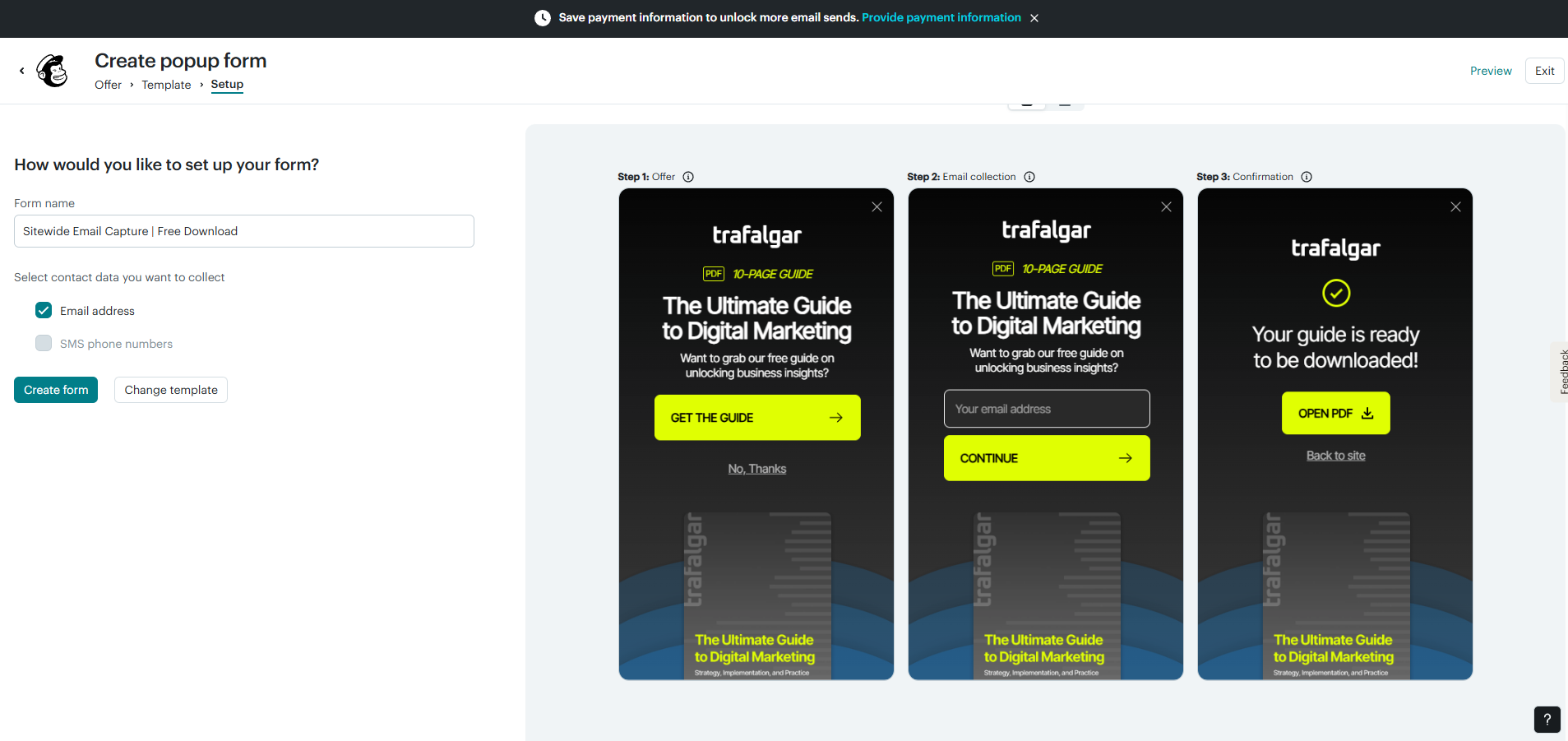
Time for the honest counterpoint. Mailchimp ships popup forms natively, with multiple templates, exit-intent triggers, time-on-page rules, and device targeting all built in. The popup builder is one of the cleanest parts of the platform.
ActiveCampaign's form builder generates a clean inline signup form, which you can embed or use as a hosted link. What it does NOT ship is popup behavior. No overlay, no exit intent, no scroll trigger.
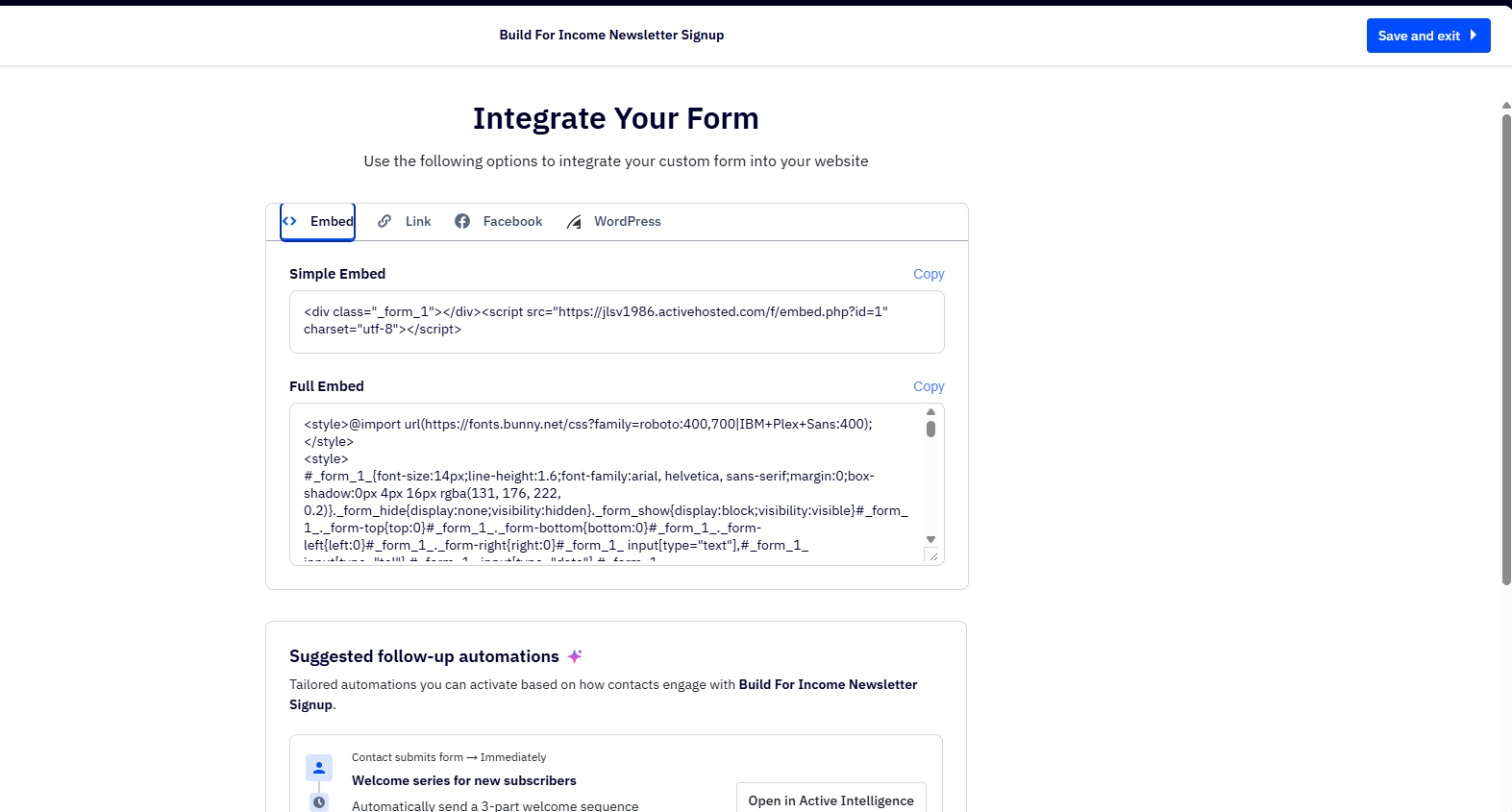
If popup signup is core to your conversion path, this gap is worth planning for. The fix is straightforward: pair ActiveCampaign with a dedicated popup tool. WordPress has solid free plugins for this (OptinMonster, Popup Maker, Convert Pro), and standalone services like Sumo or Convertful work with any site. With that pairing you get better automation depth than Mailchimp can offer alongside the popup behavior on top, often for free. It's a real gap, just not one big enough to flip the verdict.
Pricing at a realistic list size
Mailchimp's published pricing puts the Standard plan at 17.35 euros per month as the “best value” tier (Essentials starts at 11.28 euros per month, Premium jumps to 258.04 euros per month for larger lists). But the actual cost depends on contact count, since every Mailchimp plan scales with how many subscribers you have.
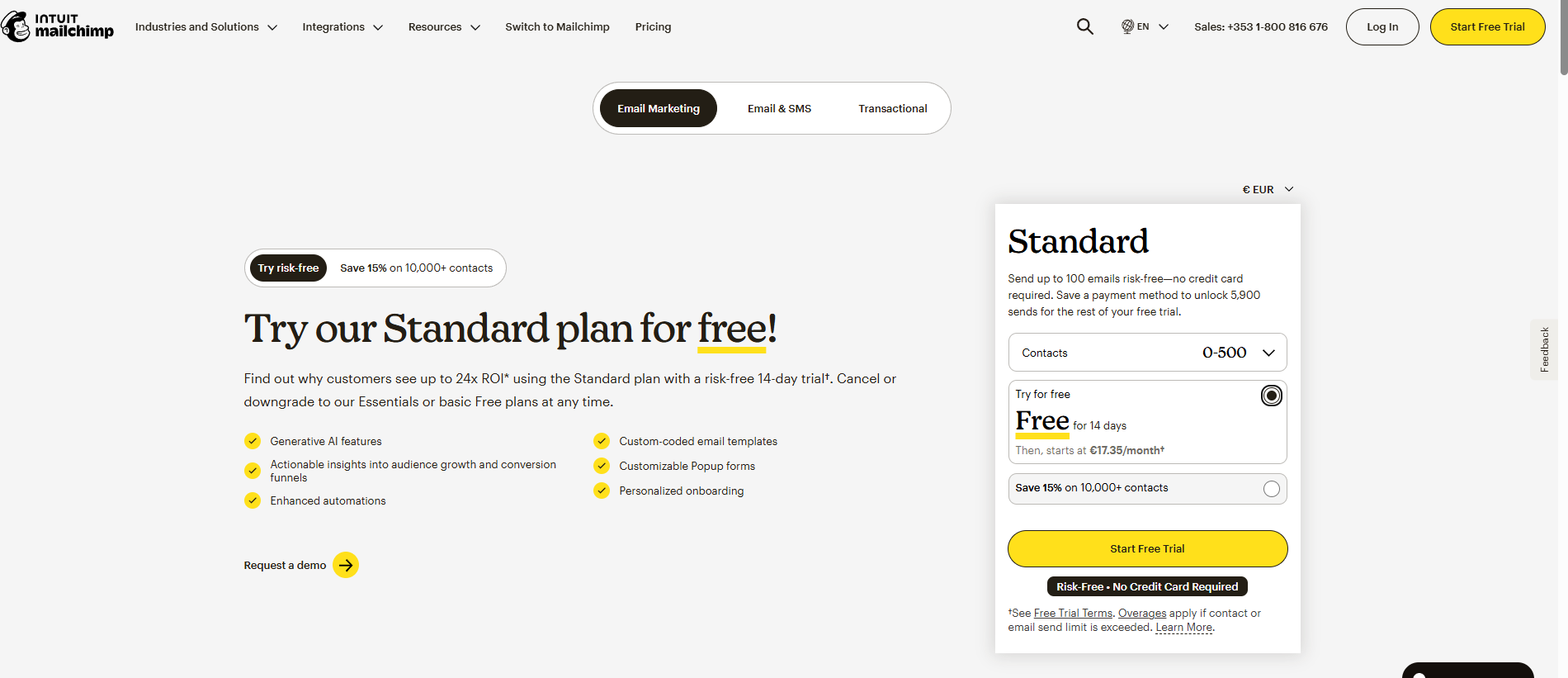
ActiveCampaign's pricing follows the same contact-based scaling pattern, with the autonomous features (Active Intelligence and AI Agents) included on the standard plans rather than locked behind enterprise tiers. The fair comparison is at your real list size, not the headline number. Both platforms post their pricing calculators publicly, so plug in your actual contact count before deciding.
Verdict: ActiveCampaign wins across the board
After running both trials side by side, I'm calling this one for ActiveCampaign even for use cases I'd normally hand to Mailchimp. The deciding factor isn't features, Mailchimp has plenty. It's ease of use, and that one factor matters more in 2026 than it ever has.
Mailchimp feels like email marketing from the old days, when you had to spend hours in tutorials understanding how audiences, segments, journeys, and tags interact, then manually build every automation node from scratch, then design every email by dragging blocks around a template for an hour. The platform is polished, but it assumes you'll do the work. For a hobby blogger or small content creator with no marketing background, that learning curve is a real obstacle to ever sending anything at all. A lot of people sign up for Mailchimp, get overwhelmed, and quietly never come back.
ActiveCampaign genuinely tries to remove that work. Paste your URL, get a strategy. Type one prompt, get a working automation. Type another prompt, get a signup form. You don't need to understand the underlying concepts before producing something usable. You can grow into the depth as you need it, instead of learning everything upfront just to send your first welcome email.
Pick ActiveCampaign if: you want to be sending real emails to real subscribers this week, you're a content creator, hobby blogger, solo founder, or small business owner running anything from a brand new list to several thousand subscribers, you want the AI to do the boring scaffolding work, or you simply don't want to spend your weekend watching YouTube tutorials trying to figure out why your automation isn't triggering.
Pick Mailchimp only if: popup signup forms are the absolute core of your conversion path AND you refuse to install a popup plugin alongside your email tool. That's a narrow case. For everyone else, ActiveCampaign is the easier, faster, more honest choice.
The honest takeaway from running both trials this month: ActiveCampaign feels like a platform actively trying to remove work from your day. Mailchimp feels like a platform that built a polished UI on top of email-list-management software from a decade ago, then asked you to learn it. Both reach the same destination eventually, but ActiveCampaign gets there without making you watch a tutorial first. That's the kind of difference that compounds, especially for anyone just starting out. For the broader landscape, I've also put together a roundup of the best email marketing automation software for 2026 if you want to see how AC stacks up against more than just Mailchimp.