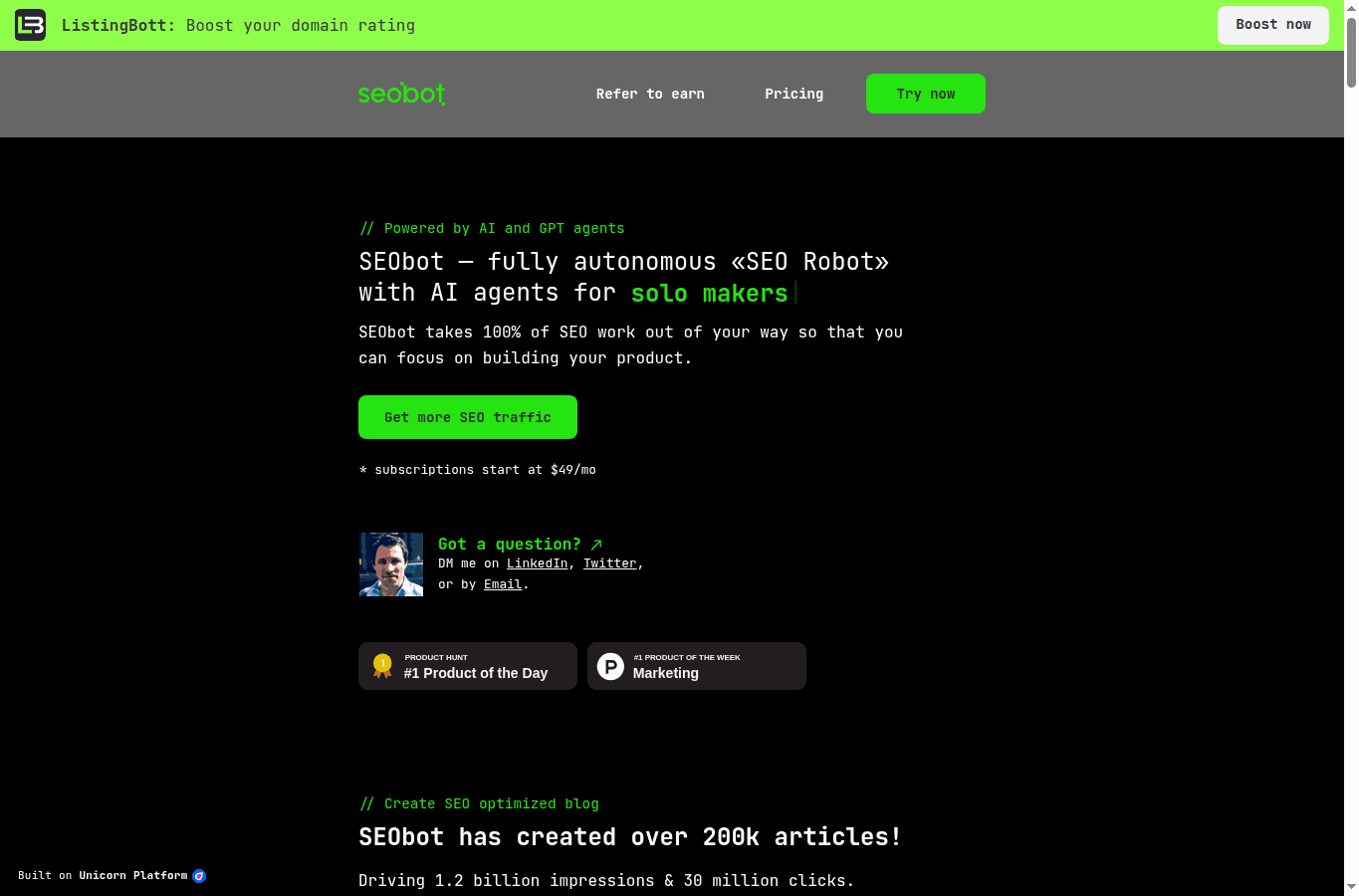
SEObotAI is interesting because it promises something many founders want but rarely execute consistently: a repeatable SEO process that researches keywords, creates articles, adds links, and keeps a blog moving while the founder works on the product.
This is not a hands-on review. I have not run a live SEO campaign inside SEObotAI. The practical question here is narrower: based on the public product claims, tool-directory signals, and current market context, when could an autonomous SEO robot be worth testing for a small business, SaaS project, niche site, or service operator?
| Quick verdict | What to know |
|---|---|
| Best fit | Busy founders, small SaaS teams, directories, and niche-site operators who already have a clear topic or customer segment. |
| Money-making path | More targeted search traffic can feed product trials, leads, ad impressions, newsletter signups, sponsor interest, or commission-based comparison pages. |
| Main risk | Automated SEO can multiply mediocre pages quickly if nobody controls search intent, originality, internal links, factual accuracy, and publishing thresholds. |
| Worth testing when | You can start with a small topic cluster and manually approve the first batch before scaling. |
| Avoid when | You need original hands-on reviews, expert-led advice, sensitive claims, or guaranteed rankings. |
What SEObotAI claims to automate
The public positioning around SEObotAI is direct: it is described as a fully autonomous SEO robot for busy founders. Search snippets and product-directory profiles repeatedly point to the same core workflow: programmatic SEO, automatic keyword research, AI-generated blog content, internal linking, and backlink-related automation.
That matters because the real bottleneck for many small sites is not only writing. It is deciding what to write, mapping the article to a business goal, formatting it, linking it to useful pages, and keeping the process consistent long enough to collect search data.
| Claim area | What public sources indicate | Practical meaning |
|---|---|---|
| Keyword research | SEObotAI is repeatedly described as handling automatic keyword research. | Useful only if the topics match a focused site and do not create overlapping posts. |
| Content generation | Tool profiles describe optimized article creation and blog automation. | A draft engine can save time, but the output still needs fact checks, examples, and editorial judgement. |
| Internal linking | Product snippets and directories mention AI internal linking. | This is valuable if links point readers toward genuinely useful next steps, not random keyword anchors. |
| Programmatic SEO | The official search result highlights programmatic SEO. | This can help directories and repeatable page types, but it is also where thin-content risk becomes highest. |
Who should consider testing it?
| User type | Why it might fit | First sensible test |
|---|---|---|
| Indie SaaS founder | SEO can bring problem-aware visitors without hiring an agency immediately. | Create a small support cluster around customer pain points and compare drafts against existing SERPs. |
| Directory or marketplace owner | Programmatic pages can work when each page has unique, useful data. | Test one category or use-case template before generating hundreds of pages. |
| Niche publisher | Consistent supporting posts can build topical depth around commercial pages. | Use automation for first drafts, then add original examples, tables, images, and internal links manually. |
| Small agency/operator | A repeatable SEO workflow can become part of a productized client service. | Use it for research and draft production, while keeping strategy and client approval human-led. |
How could this actually make money?
The money-making mechanism is indirect. SEObotAI does not create revenue by itself. It may help create more search entry points, and those pages can support a business model if the site already has something useful to offer.
| Business model | Possible mechanism | What must be true first |
|---|---|---|
| SaaS | Informational articles can bring readers who later try the product, book a demo, or join a list. | The content must connect to real product use cases rather than generic SEO filler. |
| Service business | Problem-led posts can support lead generation for a specific offer. | Trust pages, examples, location or niche focus, and a clear contact path need to exist. |
| Publisher site | More useful articles can support ads, sponsorships, and email growth. | The content must be good enough for readers, not only keyword-matched for bots. |
| Comparison content | Supporting posts can strengthen internal links toward buying guides or tool comparisons. | The commercial page should be honest, specific, and not a fake hands-on review. |
This topic fits BuildForIncome's wider AI tools to make money online angle, but it is more focused than another generic AI-tools list. It also pairs naturally with the existing LLaMaRush review, because both sit in the AI SEO automation cluster while approaching the problem from slightly different product angles.
Where SEObotAI looks useful
- It targets a real founder problem: SEO work is valuable but easy to postpone when product, support, and sales are more urgent.
- The workflow appears more end-to-end than a plain AI writer because keyword research, content, linking, and publishing are part of the positioning.
- It can be tested on a narrow cluster before a site owner commits to high-volume automation.
- The market has independent directory and Product Hunt signals, which suggests people are actively searching for this category rather than only one vendor promoting it.
Where to be skeptical
- Autonomous SEO tools can create overlapping pages if they are not constrained by a site map and existing article inventory.
- AI-generated articles can sound confident while missing original examples, product nuance, current pricing, screenshots, or lived experience.
- Backlink-related automation needs caution. Low-quality link tactics can create more risk than upside.
- Pricing was not clearly extractable from the official pages in this run, so cost-benefit should be checked manually before any paid test.
- No tool can guarantee rankings, clicks, AI citations, leads, or revenue.
A safer first test plan
| Step | What to do | Why it matters |
|---|---|---|
| 1 | Pick one focused cluster, such as alternatives, integrations, use cases, or a specific customer problem. | A narrow cluster makes overlap easier to control. |
| 2 | Generate a small batch of drafts rather than turning on high-volume publishing. | You need to judge quality before scaling. |
| 3 | Compare each draft against the current top results and your existing posts. | This prevents duplicate intent and weak pages. |
| 4 | Add human examples, screenshots where you have them, caveats, and internal links. | That is what usually separates useful content from generic AI output. |
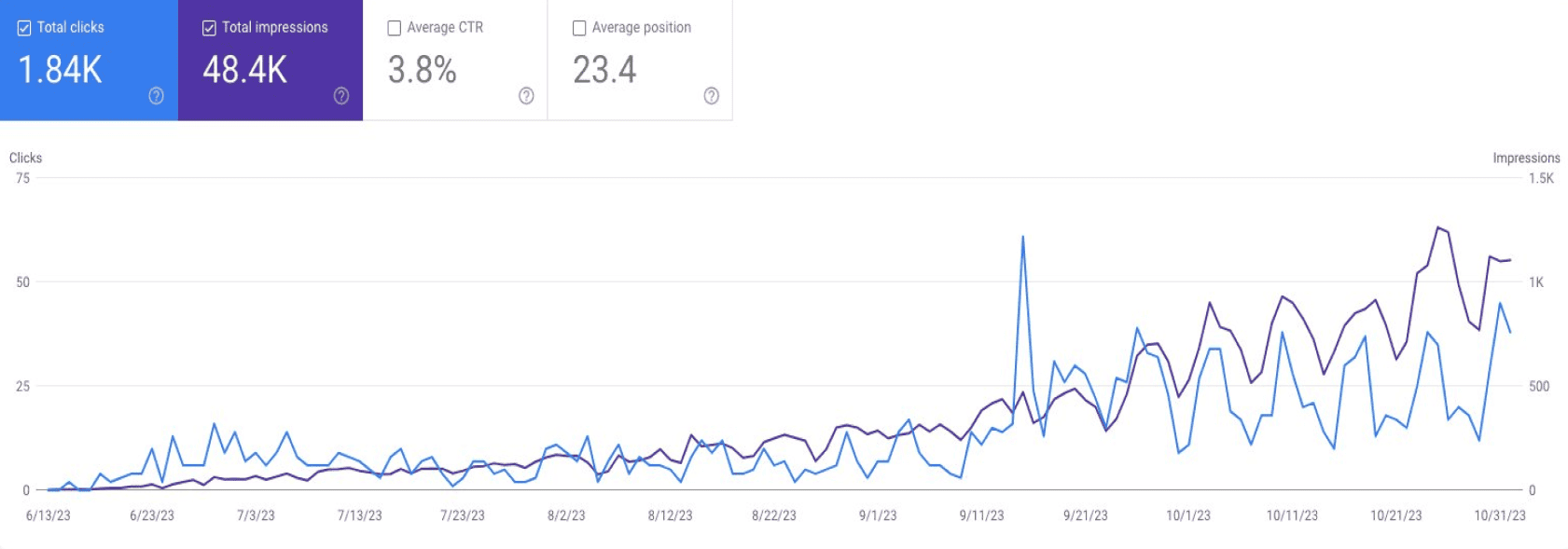
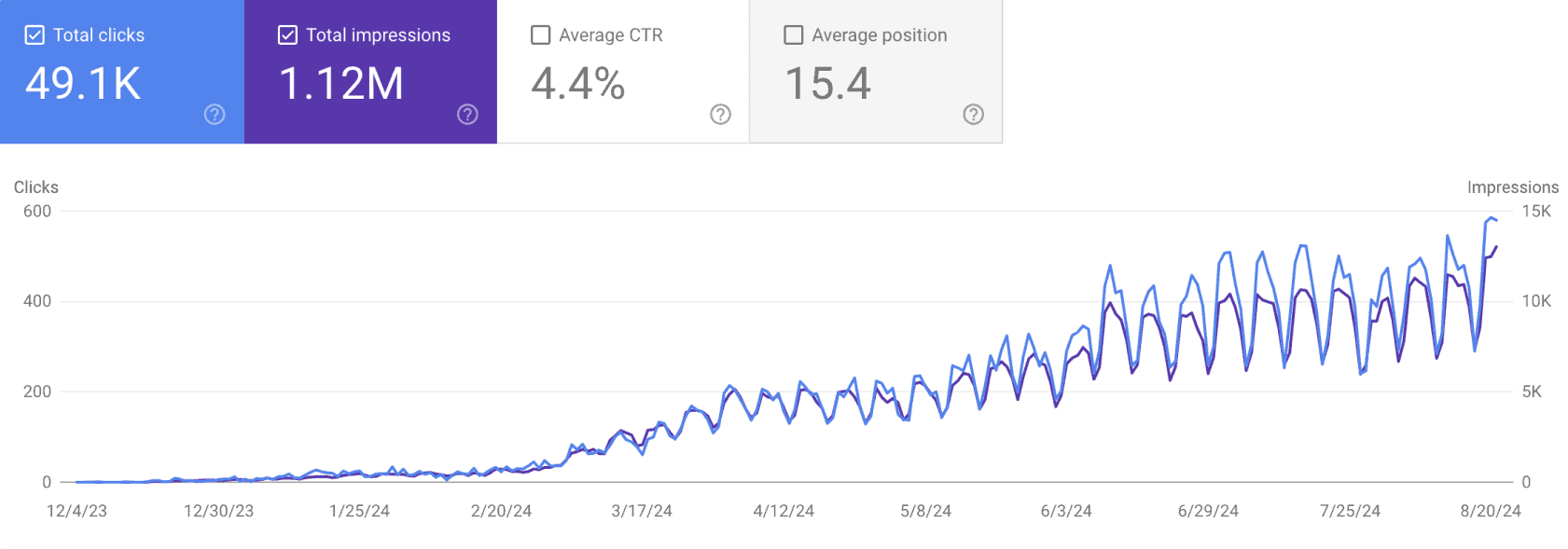
| 5 | Publish only the strongest edited pages and wait for Search Console signals. | Impressions, clicks, and query data should decide whether to expand. |
SEObotAI alternatives to compare
The best alternative depends on what you actually want automated. Some tools focus on founder-friendly content workflows, others on programmatic SEO, content scoring, or AI-search visibility tracking.
| Alternative | Better for | Why compare it |
|---|---|---|
| LLaMaRush | Founder-focused AI search and SEO content workflows | BuildForIncome already has a review, making it a natural internal comparison point. |
| SEOmatic | Programmatic landing pages and CMS-scale SEO | More relevant when the opportunity is many structured pages, not standard blog posts. |
| Surfer SEO / Frase | Human-led briefs and content optimization | Better when you want editorial control instead of autonomous execution. |
| Manual content ops | Original reviews, interviews, and high-trust commercial pages | Still safer for content where experience and credibility matter. |
When it is worth testing
- You already know the audience, offer, or niche you want to grow.
- You have existing pages that can receive internal links from new supporting posts.
- You are willing to review drafts before publishing them.
- You measure impressions, clicks, leads, email signups, and assisted conversions rather than judging success by article count.
When to avoid it
- Avoid it if your site is unfocused and you are hoping automation will choose a profitable niche for you.
- Avoid it if your topic requires professional expertise, legal precision, medical accuracy, or financial advice.
- Avoid it if you cannot review what gets published.
- Avoid it if your real bottleneck is offer quality, conversion, trust, or sales follow-up rather than content production.
This is the same practical lens BuildForIncome used when looking at autonomous marketing inside ActiveCampaign: automation is only valuable when it saves time without removing judgement. If SEObotAI is tested, the smart version is a controlled draft workflow first, not blind autopublishing.
Bottom line
SEObotAI is a strong exploratory BuildForIncome topic because it connects three monetizable trends: AI agents, founder-led SEO, and traffic systems that can support leads or revenue. The opportunity is real, but it is not magic.
The safest way to think about SEObotAI is as a content-operations accelerator. It may help a founder get from search idea to draft faster. The business upside only appears if the site owner still controls strategy, avoids cannibalization, adds genuine value, and connects the resulting traffic to a real offer.